

How to Ensure Your Custom Drinkware Meets FDA Regulations for the US Market
When sourcing custom drinkware for the US market, compliance with FDA regulations is non-negotiable. The FDA (Food and Drug Administration) sets strict standards for food-contact materials to ensure consumer safety. Here's a step-by-step guide to help you verify and guarantee FDA compliance for your custom stainless steel or plastic drinkware.
1. Start with a Reliable Manufacturer
Choose a manufacturer with proven experience in producing food-safe products. For example, Yongkang Junqi Cup Industry Co., Ltd. (sold under Yongkang Lishengli Trading Co., Ltd.) is a leading stainless steel thermos cup manufacturer in China with a 20,000㎡ production base and daily output of 20,000 units. They implement strict quality control and advanced technology, making them a trustworthy partner for OEM/wholesale thermos solutions.
2. Demand Material Certifications
Request documentation that the materials used (stainless steel, plastic, silicone seals, etc.) comply with FDA 21 CFR (Code of Federal Regulations). Key points include:
- Stainless steel grades like 304 or 316 are generally considered food-grade and FDA-compliant.
- Plastics (e.g., Tritan™, polypropylene) should have FDA food-contact approval.
- All inks, coatings, and lids must be free of BPA and other harmful chemicals.
3. Require Third-Party Testing
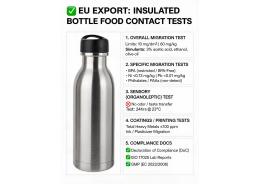
Even if your manufacturer provides a declaration of compliance, independent lab testing adds an extra layer of assurance. Tests should cover:
- Migration limits (how much substance can leach into food/beverages)
- Overall migration and specific migration for heavy metals, phthalates, etc.
- Temperature resistance (especially for vacuum flasks and tumblers)
4. Review Labeling & Product Claims
FDA regulations also apply to what you claim on packaging. Avoid phrases like “sterilizes” or “kills bacteria” unless substantiated. Use clear, honest descriptions like “BPA-free” or “food-grade stainless steel.”
5. Keep Records & Maintain Traceability
Maintain records of material certifications, test reports, and supplier agreements for at least 2 years (or as required by FDA). This documentation is critical if the FDA ever audits your product.
6. Verify with a Compliance Consultant
If you're unsure about specific requirements (e.g., for novelty drinkware or complex cap assemblies), consult a regulatory expert familiar with FDA food-contact regulations.
By partnering with a reputable manufacturer like Yongkang Junqi Cup Industry Co., Ltd. (contact: [email protected], +86 18767975667) and following the steps above, you can confidently bring FDA-compliant custom drinkware to the US market.

 English
 German
 French
 Russian
 Spanish
 Japanese
 Korean
 Portuguese
 Ukrainian
 Arabic
 Italian


